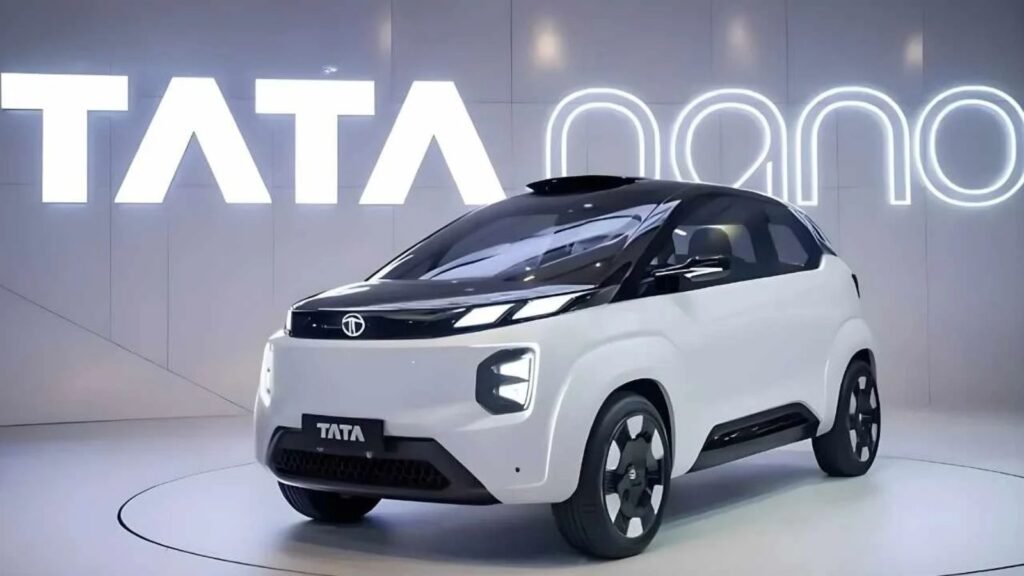
Tata Motors has once again captured national attention with the unveiling of the Tata Nano Electric 2026, a compact and budget-friendly electric vehicle designed specifically for India’s urban households. The Nano name has always carried emotional weight in the Indian automotive landscape. It once symbolized accessible mobility for the masses. Now, with the Tata Nano Electric 2026, that vision returns—this time powered by electricity, modern engineering, and a renewed focus on sustainability.

Priced at an eye-catching ₹2.99 lakh (ex-showroom), the Tata Nano Electric 2026 aims to redefine what affordable electric mobility looks like. It blends compact practicality with upgraded styling, improved battery technology, and smart features tailored for everyday life. Rather than being just a nostalgic revival, this new model presents itself as a forward-looking urban mobility solution.
In a country where fuel prices fluctuate and cities grow increasingly congested, the Tata Nano Electric 2026 positions itself as a logical and economical alternative. It isn’t just about bringing back a name—it’s about reshaping expectations of what a small electric car can deliver.
Design and Interiors: Compact Yet Contemporary
At first glance, the Tata Nano Electric 2026 looks nothing like the Nano of the past. Tata Motors has given it a fresh, futuristic personality suited to modern urban streets. The compact proportions remain, making it ideal for tight city roads and narrow parking spaces, but the styling feels significantly more premium and contemporary.
The front fascia features a closed EV grille design, emphasizing its electric identity. Sharp LED daytime running lights add sophistication, while the aerodynamic curves improve efficiency and visual appeal. The Tata Nano Electric 2026 adopts smoother body lines compared to its predecessor, giving it a cleaner, more confident road presence.
Dual-tone paint options enhance customization, allowing buyers to choose combinations that reflect their personality. Sporty bumpers and neatly designed 13-inch alloy wheels further elevate its stance. Despite its small size, the Tata Nano Electric 2026 does not appear basic or stripped-down—it looks purposeful and modern.
Step inside, and the cabin reveals thoughtful upgrades. The interior of the Tata Nano Electric 2026 balances comfort with practicality. A touch-enabled infotainment system sits at the center of the dashboard, complemented by a fully digital instrument cluster. The layout is simple yet functional, ensuring drivers can access essential information without distraction.
Seating is configured for four adults, and thanks to smart packaging, there is sufficient headroom and legroom for urban commutes. Soft fabric upholstery adds a comfortable touch, while durable materials ensure easy maintenance. The Tata Nano Electric 2026 makes intelligent use of every inch of interior space, proving that compact dimensions do not necessarily mean cramped conditions.
Engine and Performance: Electric Power for Everyday India
Under the skin, the Tata Nano Electric 2026 runs on a 72V high-performance lithium-ion battery system paired with a 48PS electric motor. This setup produces 115 Nm of instant torque—an important characteristic of electric vehicles that ensures smooth acceleration from a standstill.
Driving the Tata Nano Electric 2026 feels different from traditional petrol-powered small cars. There is no engine noise, no gear shifts, and no vibrations. Acceleration is linear and quiet, making city traffic far less stressful. Tata’s advanced power management system ensures consistent performance while maintaining efficiency.
With a claimed top speed of 120 km/h, the Tata Nano Electric 2026 is capable of handling not only urban traffic but also occasional highway drives. While it is primarily built for city use, the performance figures indicate it won’t feel underpowered during short intercity trips.
Drivers can switch between Eco and Sport modes. Eco mode prioritizes maximum efficiency, extending driving range and reducing energy consumption. Sport mode, on the other hand, enhances throttle response for quicker acceleration when needed. This dual-mode system gives the Tata Nano Electric 2026 flexibility to adapt to different driving situations.
Mileage and Range: A Game-Changing Claim
One of the most talked-about highlights of the Tata Nano Electric 2026 is its certified 525 km range per charge. For a car in this price bracket, that number stands out dramatically. Even in practical conditions, real-world driving is expected to deliver around 480–500 km depending on driving style, passenger load, and traffic conditions.
Such range figures position the Tata Nano Electric 2026 among the most efficient small EVs in its segment. For daily city commuters, this means fewer charging cycles and greater peace of mind. Many users may only need to charge the car once a week under normal urban usage patterns.
Regenerative braking further enhances efficiency. Whenever the driver slows down or applies the brakes, the system captures kinetic energy and converts it back into battery charge. This feature not only extends range but also reduces wear on brake components.
Advanced thermal management technology ensures that the battery maintains optimal operating temperature even in India’s varied climate conditions. Whether facing peak summer heat or cooler winter mornings, the Tata Nano Electric 2026 is engineered to deliver consistent performance.
Technology and Smart Features: Small Car, Big Innovation
Despite its affordable positioning, the Tata Nano Electric 2026 does not compromise on modern technology. The digital dashboard offers real-time driving data, battery health updates, and navigation information.
AI voice assistance allows drivers to control certain features hands-free, adding convenience and safety. Remote connectivity features enable users to check battery status, lock or unlock the vehicle, and even pre-condition the cabin temperature through a smartphone app.
Dual drive modes, regenerative braking, and energy optimization systems work together to enhance usability. The infotainment system supports smartphone connectivity, making navigation and entertainment seamless during commutes.
The Tata Nano Electric 2026 proves that advanced technology can be integrated into compact, affordable vehicles without overwhelming the user. Everything feels practical and intuitive rather than excessive.
Charging Convenience: Fast and Flexible
Charging infrastructure continues to grow across India, and the Tata Nano Electric 2026 is designed to fit seamlessly into this evolving ecosystem. The vehicle supports standard home charging as well as fast-charging options.
With fast charging, the Tata Nano Electric 2026 can reportedly achieve a significant charge in as little as 45 minutes. This makes it practical for users who need quick top-ups during busy schedules.
Home charging remains the most economical solution. Owners can plug in overnight and wake up to a fully charged vehicle. Combined with low electricity costs compared to petrol, the Tata Nano Electric 2026 dramatically reduces daily running expenses.
Pricing and EMI Options: True Affordability
Perhaps the most striking aspect of the Tata Nano Electric 2026 is its pricing. At ₹2.99 lakh (ex-showroom), it enters the market as one of the most affordable electric cars available.
Flexible EMI options starting at ₹3,499 per month make ownership accessible to a wider audience. Zero down payment schemes in select states further reduce the barrier to entry. Government EV subsidies of up to ₹50,000 can also help buyers lower the effective cost.
Tata Motors supports the Tata Nano Electric 2026 with a seven-year battery warranty and three years of free service. This not only reduces maintenance costs but also builds confidence among first-time EV buyers.
Who Should Consider the Tata Nano Electric 2026?
The Tata Nano Electric 2026 appeals to a broad yet specific group of buyers:
-
Urban families seeking a second car for daily errands
-
College students looking for economical personal transport
-
First-time car buyers transitioning from two-wheelers
-
City commuters wanting to reduce fuel expenses
-
Environment-conscious drivers aiming to lower their carbon footprint
For these audiences, the Tata Nano Electric 2026 offers a compelling blend of affordability, efficiency, and practicality.
Conclusion: A Milestone for Affordable Electric Mobility
The Tata Nano Electric 2026 represents more than just a product launch—it signals a shift in India’s EV narrative. By combining a 525 km range, a 72V lithium-ion battery, fast charging capability, and an entry-level price point, Tata Motors has made electric mobility more attainable than ever before.
Stylish yet practical, compact yet spacious, and affordable yet technologically advanced, the Tata Nano Electric 2026 stands as a strong contender in India’s growing electric car market.
This vehicle is not just about reviving a name—it is about redefining it. The Tata Nano Electric 2026 transforms the Nano legacy into a symbol of clean, intelligent, and inclusive mobility.
For India’s cities and families, the message is clear: sustainable transportation no longer needs to be expensive. With the Tata Nano Electric 2026, the future feels closer, cleaner, and far more accessible.